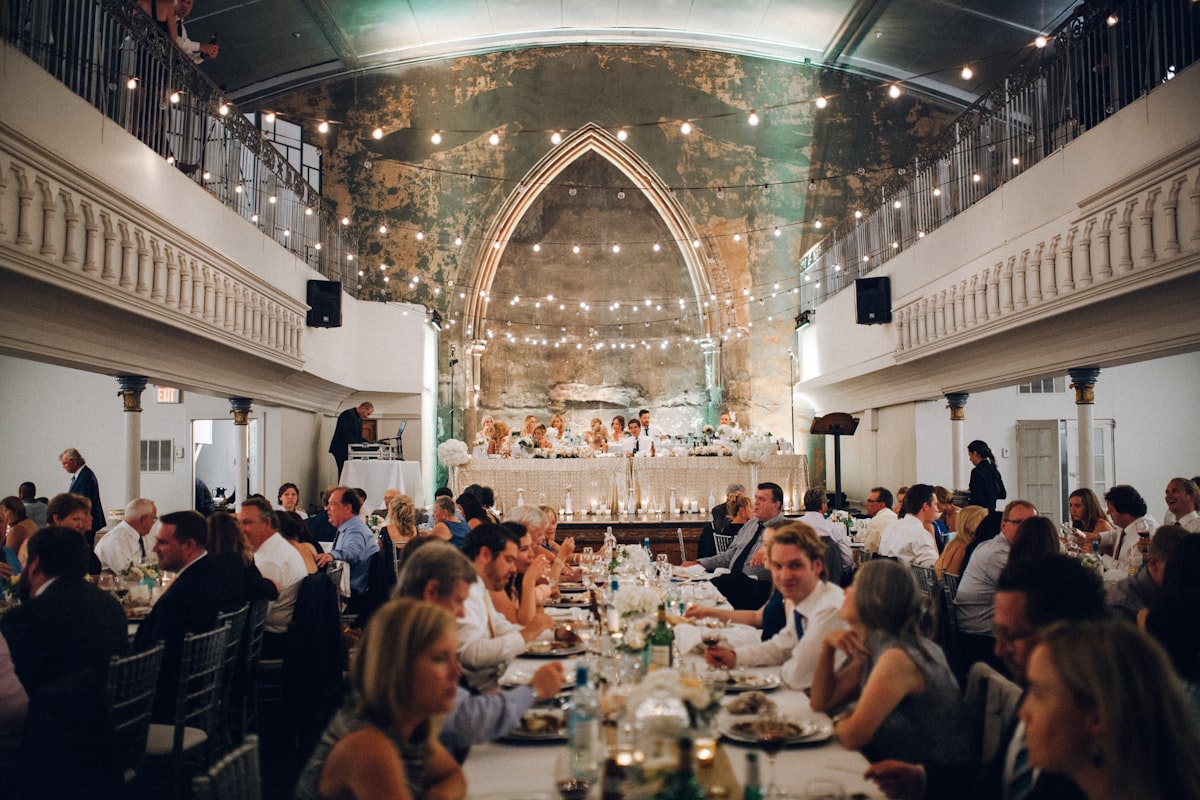
The standard server-to-guest ratio for a plated dinner is 1 server per 8 to 10 guests. Buffet service drops that requirement to 1 per 16 to 20. Servers are only one of seven roles you need to staff for a well-run event. This guide covers the recommended ratio for each service position so you can build an accurate headcount before your next event.
Staffing Ratios by Role
Your total staff count depends on which roles your event requires. Below are the industry-standard ratios for seven common event service positions.
Servers (Plated and Buffet): 1 per 8-10 guests for plated, 1 per 16-20 for buffet. Service style creates the biggest swing in headcount. Plated meals with synchronized courses need tight table coverage, while buffet setups free staff to focus on clearing and station replenishment.
Bartenders: 1 per 35-50 guests. Open bars serving craft cocktails push toward the lower end, while limited drink menus let each bartender handle more volume comfortably.
Banquet Captains: 1 per 4-6 servers. Events above 150 guests typically need at least one captain to coordinate timing between kitchen and floor.
Bussers: 1 per 2-3 servers. Formal sit-down events with multiple courses need more bussers than cocktail-style receptions where clearing happens in waves.
Coat Check Attendants: 1 per 75-100 guests. Winter galas at venues without dedicated storage areas see the highest demand during arrival and departure windows.
Valet Attendants: 1 per 15-20 cars. Rural venues with unpaved or distant parking lots need more coverage than downtown locations with structured garages.
Security: 1 per 75-100 guests. Large events serving alcohol or using multiple entry points benefit from a tighter ratio, especially during peak arrival and exit.
Factors That Adjust Your Baseline Ratios
The ratios above work as starting points. Five factors push them up or down for any specific event.
Service complexity. A five-course plated dinner with wine pairings needs more servers per table than a simple two-course meal. Add one server per 30 guests for every course beyond three.
Venue layout. Spread-out venues with multiple rooms, outdoor areas, or distant kitchens require extra staff to cover transit time. A banquet hall with a kitchen next door is far more efficient than a tented estate where servers walk 200 feet between stations.
Event duration. Events lasting longer than four hours need relief staff or split shifts. A six-hour wedding reception burns through energy faster than a two-hour corporate luncheon, and tired staff make more mistakes during the final course.
Guest demographics. Events with elderly guests or young children often need more attentive table service. Corporate cocktail receptions with standing guests typically need fewer servers but more bartenders.
Alcohol service level. Premium open bars with signature cocktails require more bartenders than cash bars or beer-and-wine-only setups. If your event includes both a cocktail hour and dinner service, plan separate bar staffing for each phase rather than averaging across the full timeline.
How to Calculate Total Staff for a 200-Guest Wedding
Start with your guest count and service format, then build up role by role.
For a 200-guest plated wedding dinner with an open bar, the calculation looks like this:
- Servers: 200 guests at 1:10 = 20 servers
- Bartenders: 200 guests at 1:50 = 4, plus 1 extra for cocktail hour = 5 bartenders
- Banquet captains: 20 servers at 1:5 = 4 captains
- Bussers: 20 servers at 1:3 = 7 bussers
- Coat check: 200 guests at 1:100 = 2 attendants (bump to 3 for a winter wedding)
- Valet: Estimated 120 cars at 1:20 = 6 valet attendants
Total: approximately 45 staff members for 200 guests.
This count excludes kitchen staff, DJs, and photographers. Your catering company typically supplies servers, bussers, and captains, while valet and coat check often come from separate vendors. Track each vendor's committed headcount in one place so gaps do not surface the week before the event. Once you have your staff headcount confirmed, factor in gratuity for each role — our event tip and gratuity guide covers standard rates for servers, bartenders, valet, and coat check attendants so you can build that line into your budget early.
Our free budget calculator estimates staffing costs alongside venue, catering, and vendor line items based on your event type and guest count.
Common Staffing Mistakes Planners Make
Under-staffing the cocktail hour. Cocktail hour generates the highest per-minute demand for bartenders and passed-appetizer servers. Many planners staff for the dinner ratio and leave the cocktail hour short-handed. Calculate cocktail hour staffing separately from dinner.
Forgetting bussers entirely. Bussers keep the dining experience smooth by clearing between courses. Without them, servers split their attention between delivering food and removing plates, slowing down service for everyone at the table.
Ignoring transition periods. The 20 minutes between cocktail hour and dinner seating create a bottleneck. Guests need guidance, tables need final checks, and the bar needs restocking. Assign at least two staff members specifically to transition management, and build these handoffs into your day-of coordination checklist so every team member knows the sequence.
Not confirming headcount with each vendor. Your catering company, bar service, valet provider, and security firm each control part of your total staffing picture. Event staffing software centralizes these commitments so a last-minute change from one vendor does not slip through unnoticed. If you track them across scattered spreadsheets and email threads instead, gaps surface too late. Including staffing gaps in your event risk management plan ensures someone is responsible for catching shortfalls before the event.
A contractor management tool like Abastio centralizes your vendor roster, tracks confirmed headcount per vendor, and flags gaps before they become day-of problems. Plans start free for solo organizers managing up to two active events. Once you lock in your numbers, align your entire team using our guide to briefing event staff before the event.
Frequently Asked Questions
How many servers do I need for 100 guests at a plated dinner?
Plan for 10 to 13 servers. A plated dinner with synchronized courses requires roughly one server for every eight to ten seated guests, so 100 guests falls squarely in that range. Add one or two more if the menu includes more than three courses.
What is the standard bartender-to-guest ratio for a wedding?
1 bartender per 35 to 50 guests. For a 150-guest wedding with an open bar, hire 3 to 4 bartenders. Add one extra if the cocktail hour runs a dedicated bar separate from the dinner service.
Do I need bussers if I already have enough servers?
Yes. Bussers handle plate clearing, table resetting, and water refills so servers can focus on food delivery and guest interaction. Plan 1 busser per 2 to 3 servers for a plated dinner. Skipping bussers slows down course transitions and overloads your servers.
How many security staff do I need for a 500-guest event?
5 to 7 security personnel at 1 per 75 to 100 guests. Events with alcohol service, outdoor layouts, or multiple entry points need staffing toward the tighter end of that range. Coordinate with your venue to confirm whether they provide any in-house security.
Should I staff valet for every event?
Only if the venue has limited or inconvenient parking. The standard ratio is 1 valet attendant per 15 to 20 cars. For a 200-guest event where most guests drive, estimate 100 to 130 cars and staff accordingly. Downtown venues with nearby parking garages rarely need valet at all.
Ready to simplify your event management?
Try Abastio free and see how it streamlines vendor coordination.
Start freeMore posts

Event Subcontractor Agreement Template
Destination Wedding Vendor Coordination Guide

Post-Event Vendor Debrief Template
Wedding Timeline Software: A Planner's Guide
Event Setup and Teardown Checklist for Planners

Wedding Vendor Checklist Template for Planners

How to Handle Last-Minute Event Changes

How to Create an Event Run Sheet (Step by Step)
Event Logistics Planning Guide for Organizers

How to Manage Corporate Event Vendors

Client Communication Tips for Event Planners
Planning Pod vs HoneyBook: Which Fits Your Events?
Event Cost per Attendee Calculator and Guide
How to Create a Vendor Management System for Events
Event Staffing Software for Small Business Teams

Whova Alternatives for Event Planners in 2026

Eventbrite Alternatives for Small Events in 2026

Event Vendor Insurance Requirements Checklist

How to Choose Event Management Software
Best Invoicing Software for Event Planners (2026)
Wedding Vendor Payment Schedule Template
Event Planner Markup Percentage by Vendor Type

Bizzabo Alternatives for Event Planners
Vendor Relationship Management for Event Planners

Event Cost Calculator: Estimate Your Budget Right

Event Contractor Payment Tracking Tools for Planners

Event Communication Plan Template for Planners

How to Create Event Planning Packages

Event Insurance Cost: What Percentage of Your Budget
Social Tables Alternatives for Event Planners

How to Avoid Hidden Vendor Fees at Events
Corporate Event Planning Checklist for 2026

Post-Event Evaluation Template for Planners

Event Workflow Software: A Practical Guide

Propared Alternatives for Event Planners

Best Software for Managing Event Contractors
Wedding Planner Commission Rate Guide for 2026

Best CRM for Event Planners in 2026
Event Coordinator Tools for Portugal

Event Planner CRM: What to Look For in 2026
Vendor Contract Red Flags for Event Planners
Tripleseat Alternatives for Independent Planners
Event Catering Cost per Person by Event Type

Freelance Event Planner Toolkit for 2026

Wedding Vendor Management Spreadsheet Template
Subcontractor Management for Events in Portugal

Hidden Costs of Event Planning You Need to Know
Event Planning Software Pricing Compared

Event Planner Pricing Calculator: Set Your Fees
Event RFP Template for Professional Planners
How Much to Tip Event Staff and Vendors

How Much Deposit Do Event Vendors Require?

Micro Wedding Planning Checklist

How to Hire Vendors for Your Wedding

How to Brief Event Staff Before an Event
Cvent Alternatives for Small Event Planners

How to Invoice Event Clients and Get Paid

Event Vendor Performance Scorecard Guide
Event Budgeting Apps: A Practical Guide for Planners
Cut Event Costs Without Sacrificing Quality
Dubsado vs HoneyBook for Event Planners

Event Risk Management Plan Template

Aisle Planner vs HoneyBook for Event Planners
Event Planning Workflow That Keeps Projects on Track
Wedding Planning Software for Portugal

Corporate Event Management Software for Portugal
Event Collaboration Tools for Planning Teams
Best Wedding Planner Tools for 2026 (Solo to Team)

Event Cost Breakdown Template for Planners
Event Budget Contingency Planning Guide

Event Management Automation Tools for 2026
5 Planning Pod Alternatives Compared (2026)
Event Day-of Coordination Checklist

How to Negotiate Event Vendor Pricing
Event Client Onboarding Template

Best Event Planning Apps Compared: 2026 Picks for Pros

AI Tools for Event Planning: A Practical Guide

How to Create a Vendor Shortlist for Events
HoneyBook Alternatives for Event Planners

Event Planner Tools for Brazil: A Practical Guide

Free Wedding Planner Tools That Work

Event Planning Checklist: 6 Phases to Cover
Wedding Planning Software: A Guide for Pros

How to Write an Event Proposal That Wins Clients

How to Coordinate Wedding Vendors Like a Pro

Event Vendor Cancelled? Your 3-Step Recovery Plan

Event Vendor Management Tips That Actually Work

5 Signs You've Outgrown Spreadsheets for Event Planning